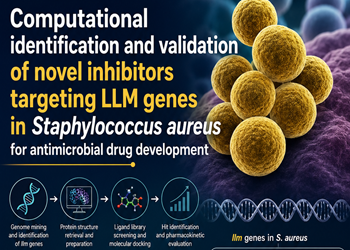
Computational identification and validation of novel inhibitors targeting LLM genes in Staphylococcus aureus for antimicrobial drug development
DOI:
https://doi.org/10.33003/chemclass-2026-1002/08
Keywords:
Staphylococcus aureus; LLM gene; Molecular docking; Molecular dynamics simulations; Virtual screening; Pharmacophore modellingAbstract
Staphylococcus aureus is a formidable pathogen responsible for a wide variety of illnesses, including some that are resistant to several antibiotics. Targeting the key llm genes in S. aureus, which are crucial for bacterial lysis and methicillin resistance, is an attractive method for accelerating the development of novel antimicrobial drugs. The aim of this research is to computationally find and validate novel inhibitors targeting these llm genes to combat S. aureus infections. An in-silico investigation was done using a complete literature review on NCBI and genomic analysis to uncover the llm genes in the S. aureus genome. Using computational techniques, including molecular docking using AutoDock Tools and PERL, twenty-two ligands, including the standard drug (Tunicamycin), were docked against the active site of the llm gene-encoded protein receptor. Pharmacokinetic investigations and molecular docking studies showed six potential inhibitors: ZINC06605913, ZINC06905586, ZINC35022243, ZINC40483738, ZINC90417652, and ZINC85428484. Molecular dynamics simulations (MDS) using GROMACS were performed on the molecules (ZINC90417652) with the highest binding affinity to examine the dynamics and stability of the protein-ligand complex. The predicted inhibitor demonstrated good pharmacological and structural properties, underscoring it’s potential as an effective antibacterial medications compare to tunicamycin. This study underscores the effectiveness of computational techniques in the identification and validation of novel inhibitors, providing a firm platform for the development of new antimicrobial medications targeting the llm genes in Staphylococcus aureus.Downloads
Download data is not yet available.
Downloads
Published
2026-06-30
Issue
Section
Original Research Articles
License
Copyright (c) 2026 The Authors

This work is licensed under a Creative Commons Attribution 4.0 International License.
All the work in this journal are licensed under a Creative Commons Attribution 4.0 International License.
How to Cite
Computational identification and validation of novel inhibitors targeting LLM genes in Staphylococcus aureus for antimicrobial drug development. (2026). ChemClass Journal, 10(2), 50-63. https://doi.org/10.33003/chemclass-2026-1002/08



 © 2026 ChemClass Journal